



Intent
At SPWP, we intend to instill awe and wonder within the pupils about the past. By learning history, pupils will understand the complexities of people’s lives, processes of change, diversity of societies and relationships between different groups as well as their own identity and challenges of their time.
We believe that a high-quality history education will help pupils gain a coherent knowledge and understanding of Britain’s past and that of the wider world, in line with our school core value which is aspiration.
Our rigorous curriculum inspires pupils’ curiosity to know more about the past. Pupils are taught to ask perceptive questions, think critically, weigh evidence, and develop perspective and judgement. This is seen in all lessons where we use sources to spark the children’s interest and encourage them to ask questions. Our history lessons allow pupils to understand the complexity of people’s lives, the process of change, the diversity of societies and relationships between different groups, as well as their own identity and the challenges of their time.

We follow the National Curriculum for history, which aims to ensure that all pupils:
- Know and understand the history from the earliest times to the present day: how people’s lives have shaped this nation and how Britain has influenced and been influenced by the wider world.
- Know and understand significant aspects of the history of the wider world: the nature of ancient civilisations; Stone Age; the expansion and dissolution of empires; characteristic features of past non-European societies and early Islamic society.
- Gain and deploy a historically grounded understanding of abstract terms such as ‘empire’.
- Understand historical concepts such as, cause and consequence, similarity, difference and significance, and use them to make connections.
- Draw contrasts between different civilisations, analyse trends explaining what they notice, frame historically-valid questions and create their own structured accounts, including written narratives and analyses.
- understand the methods of historical enquiry, and think about valid and reliable sources to help them to make an argument.
- gain historical perspective by placing their growing knowledge into different contexts, understanding the connections.
Key history themes taught at SPWP:
| Year | Themes |
|---|---|
| Year 1 | Toys Throughout Time British Monarchs Castles |
| Year 2 | The Empire Windrush
Brunel’s Britain |
| Year 3 | Stone Age To Iron Age
The Roman Empire |
| Year 4 | Anglo-Saxons and Scots
World War II |
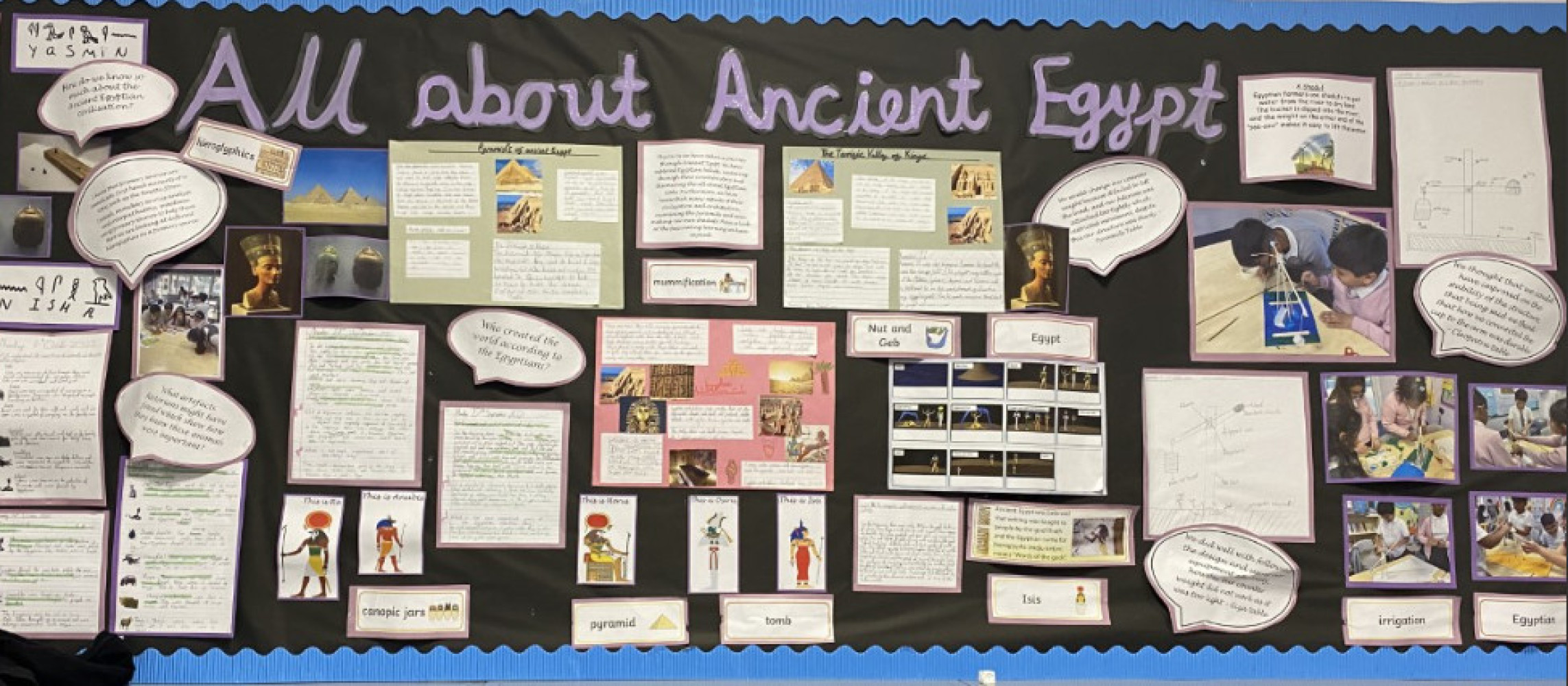
| Year 5 | Ancient Egyptians
Ancient Shang Dynasty |
| Year 6 | Ancient Greece
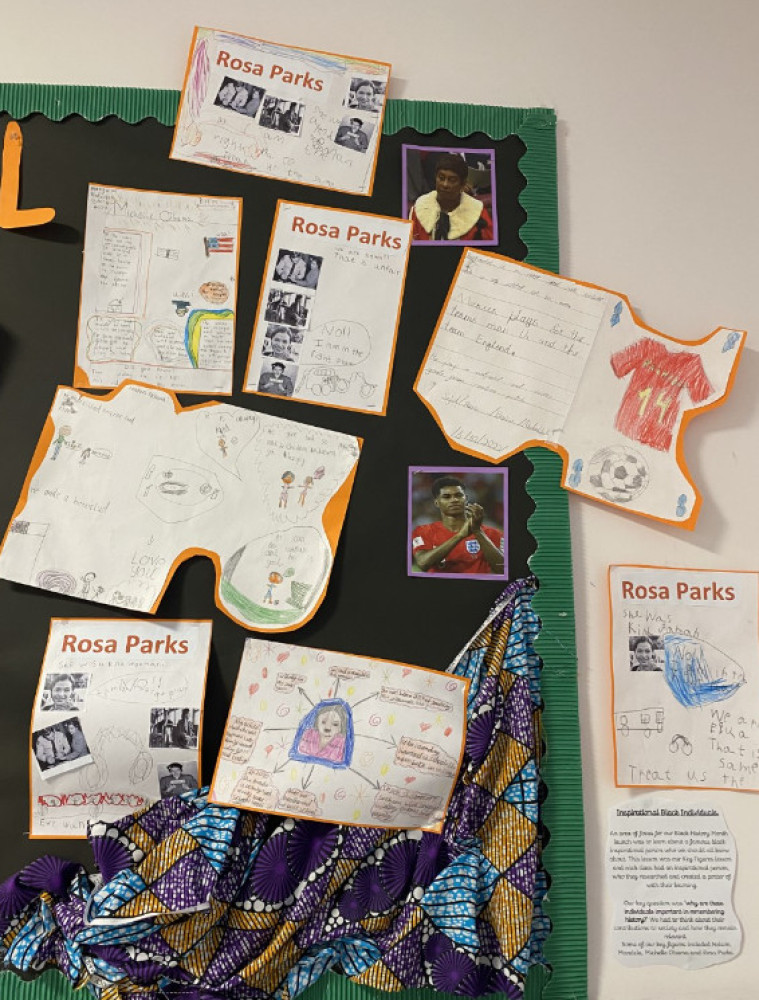
Female Activists in Modern History |
Implementation:
Our curriculum is implemented in such a way which allows for teachers to present both disciplinary knowledge and the substantive facts for each unit. Children have the opportunity to evidence their learning in a variety of ways including verbal, written, pictorial and diagrammatic responses. Our curriculum promotes oracy and rich dialogue in the classroom, therefore in a lesson you will see teachers emphasising on key vocabulary.
Teachers use the schemes of work and adapt it to the needs of their children. In a lesson, teachers will often revisit prior learning from either previous year groups or from learning earlier in the block. This helps the children develop a good understanding of complex historical ideas such as cause and consequence, as well as complex terms such as ‘empire’ and ‘migration’ which are visited over again.
Our curriculum implementation can be seen in books and through pupil voice where we have the opportunity to talk to children about their learning with their books and children are able to articulate their learning. Teachers feel confident to implement the curriculum due to CPD and are able to seek advice from the Humanities Lead. Regular drop in’s and the learning environment reflect the schemes of work being taught in each unit.
Teachers use our history exemplification document to assess pupils to understand what an expected piece of work is. They also use Afl to adapt their following lessons looking closely at the exemplification documents and planning. Children are formally assessed using the NC aims. Teachers challenge the children who have achieved the LO by asking them to apply their learning in different context or by encouraging the children to compare different times in history. We ensure we scaffold learning for children who need the support.
Teachers are supported through formal and informal CPD. We are using our Trust school to create links and use their subject expertise to support our teachers. History is taught explicitly across the school to ensure that children build an understanding of the discipline and the enquiry skills associated with studying the past.